Domain steckbare-photovoltaikanlage.de kaufen?
Wir ziehen mit dem Projekt
steckbare-photovoltaikanlage.de um.
Sind Sie am Kauf der Domain
steckbare-photovoltaikanlage.de interessiert?
domain@kv-gmbh.de · 0541-91531010
Domain steckbare-photovoltaikanlage.de kaufen?
Was sind die lateinischen Formen des Partizip Präsens, Partizip Perfekt Passiv und Partizip Futur Aktiv?
Die lateinischen Formen des Partizip Präsens enden auf -ns, -ntis. Die Formen des Partizip Perfekt Passiv enden auf -us, -a, -um. Die Formen des Partizip Futur Aktiv enden auf -urus, -ura, -urum. **
Was ist das Partizip Perfekt und das Partizip Präsens?
Das Partizip Perfekt wird gebildet, indem man zu einem Verb die Endung -t oder -et hinzufügt, z.B. "gegangen" oder "gemacht". Es wird verwendet, um die Vergangenheit auszudrücken, z.B. "Ich habe gearbeitet". Das Partizip Präsens wird gebildet, indem man zu einem Verb die Endung -end hinzufügt, z.B. "arbeitend" oder "spielend". Es wird verwendet, um gleichzeitige Handlungen auszudrücken, z.B. "Er geht singend durch die Straßen". **


Ähnliche Suchbegriffe für Partizip
Top-Angebote
Produkte zum Begriff Partizip:
-
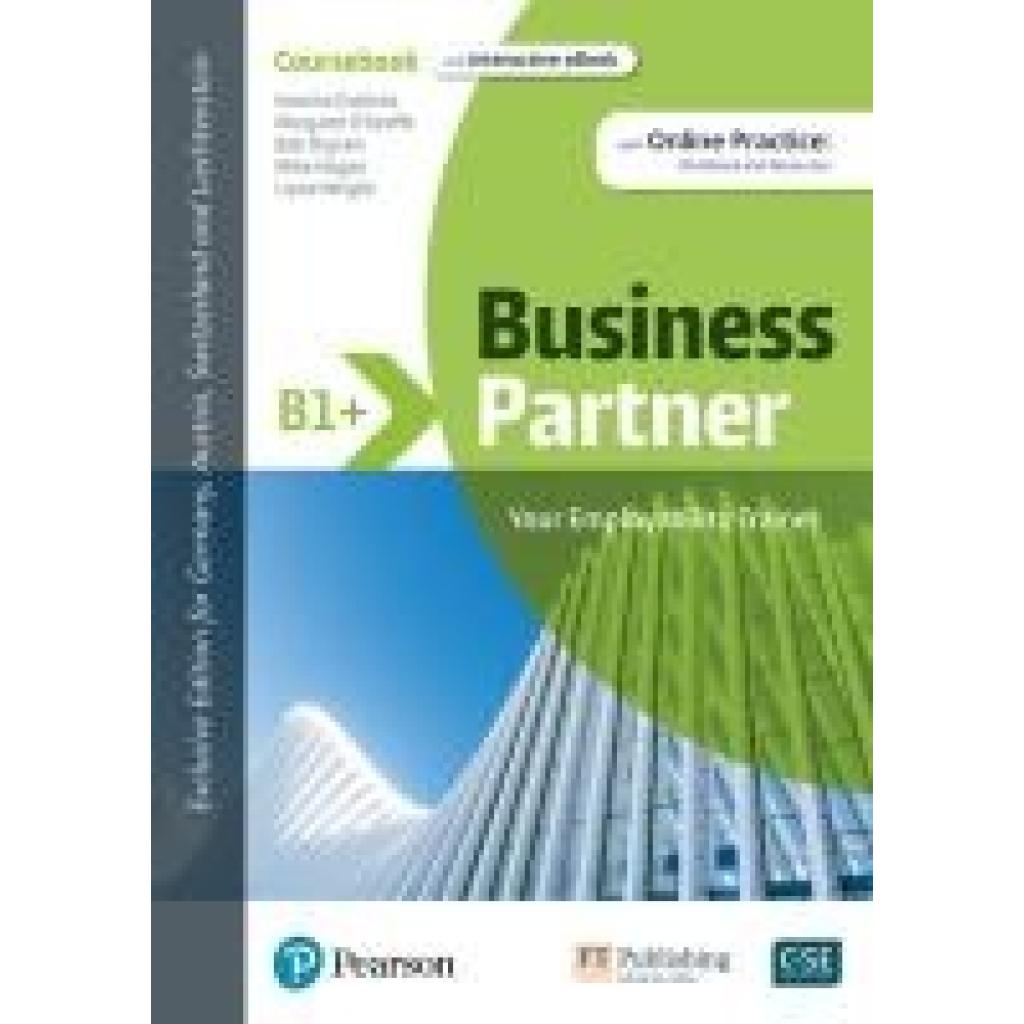
Dubicka, Iwona: Business Partner B1+ DACH Coursebook & Standard MEL & DACH Reader+ eBook PackBusiness Partner B1+ DACH Coursebook & Standard MEL & DACH Reader+ eBook Pack , Real life business content ¿ Authentic video content introduces unit topics, exposing students to real English and the sorts of issues they may encounter in their careers. ¿ Financial Times articles provide reading practice to build on the topics discussed in the videos, further exposing students to authentic English. ¿ Students work on case studies that allow them to practise their business and communication skills in realistic professional contexts. Building communicative and business skills ¿ The course builds two sets of skills - communication and practical business skills - which students practise together in the business workshop case studies. ¿ Practical skills training includes negotiating, presenting, building relationships and small talk. ¿ An innovative video-based training programme helps build the communication skills, including supporting teamwork, listening actively, collaborating, solving problems, and influencing. Building language skills ¿ Students acquire functional language and practise all the skills, including writing, grammar and pronunciation. ¿ The task-based approach incorporates presentation and practice, with a lot of communicative pair and group tasks and projects. ¿ There are multiple opportunities for writing practice across all the lessons, with a full writing lesson in each unit. Flexibility for teachers and learners ¿ The course allows teachers to pick and choose their lessons to suit their students. While units are linked by theme, each lesson stands alone and can be taught independently. ¿ Additional resources, such as the Reading Bank, Writing Bank and Functional Language Bank, provide extra support for students, while teachers can use a range of extra activities to extend and add variety to a class. ¿ Business Partner is a blended course where the coursebook works as a standalone component with signposts to a range of supplementary digital materials. , Relais & Schaltvorrichtungen > Elektromotorrad- & Elektrorollerteile & -zubehör , Auflage: 1. Auflage, Erscheinungsjahr: 20220128, Produktform: Kassette, Inhalt/Anzahl: 1, Inhalt/Anzahl: 1, Autoren: Dubicka, Iwona~Hogan, Mike~Marks, Jonathan~Dignen, Bob~Wright, Lizzie, Auflage: 22001, Auflage/Ausgabe: 1. Auflage, Fachschema: Englisch / Fachsprache Wirtschaft~Wirtschaftsenglisch~Englisch / Lehrbuch, Lehrgang, VHS, Warengruppe: HC/Schulbücher/VHS/Erwachsenenbildung, Fachkategorie: Fremdsprachendidaktik: Lehrmaterial, Begleitmaterial, Text Sprache: eng, UNSPSC: 49019900, Warenverzeichnis für die Außenhandelsstatistik: 49019900, Sender’s product category: BUNDLE, Verlag: Pearson Education, Verlag: Pearson Education, Länge: 208, Breite: 294, Höhe: 9, Gewicht: 434, Produktform: Kartoniert, Genre: Importe, Genre: Importe, Beinhaltet: B0000068276001 V65326-A103000232555-1 B0000068276002 V65326-A103000232555-2, Vorgänger: 9353208, Vorgänger EAN: 9783868948059, Katalog: Gesamtkatalog, Katalog: Internationale Lagertitel, Katalog: internationale Titel, Katalog: Kennzeichnung von Titeln mit einer Relevanz > 30, Katalog: Lagerartikel, Book on Demand, ausgew. Medienartikel, Relevanz: 0025, Tendenz: -1, Unterkatalog: AK, Unterkatalog: Bücher, Unterkatalog: Hardcover, Unterkatalog: Lagerartikel, Unterkatalog: Schulbuch, WolkenId: 279512847,32 €*Versand: 0,00 €Sichere Weiterleitung zum Anbieter
-
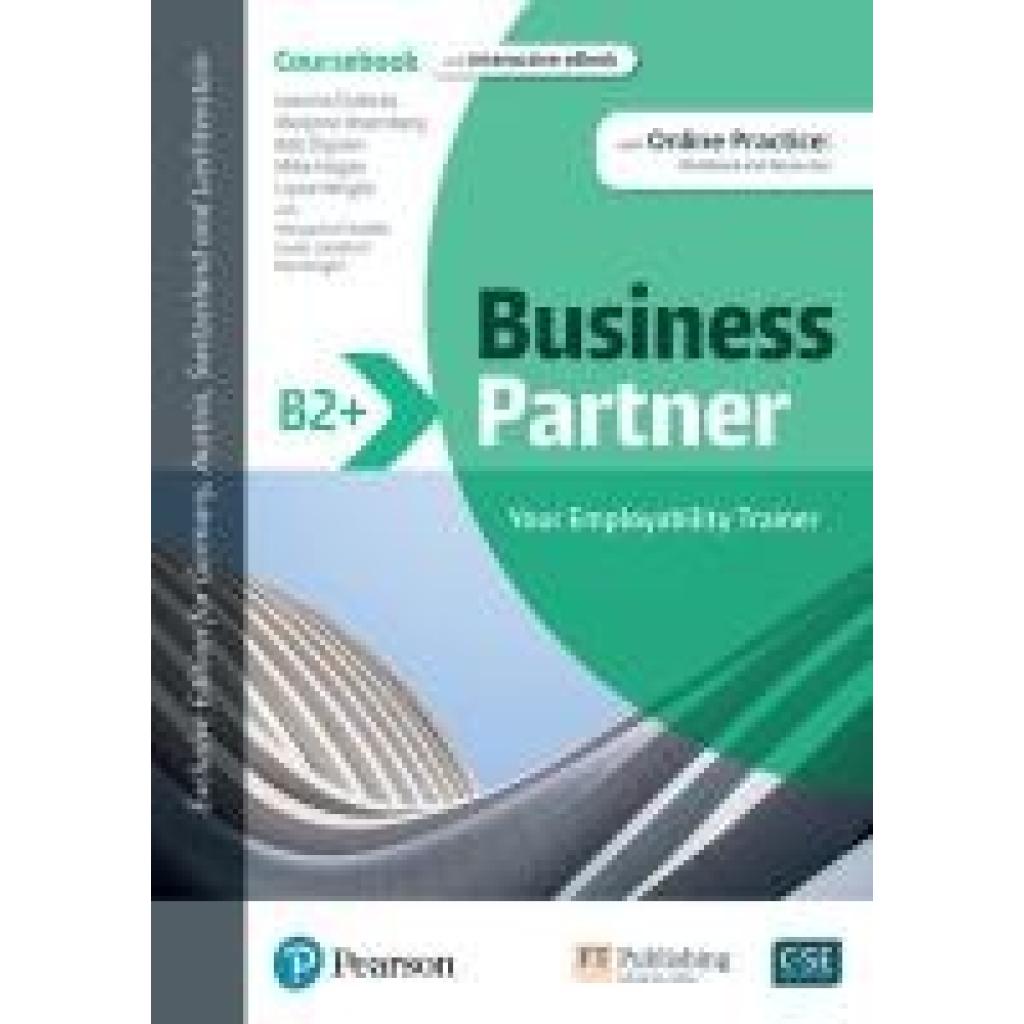
Dubicka, Iwona: Business Partner B2+ DACH Coursebook & Standard MEL & DACH Reader+ eBook PackBusiness Partner B2+ DACH Coursebook & Standard MEL & DACH Reader+ eBook Pack , Real life business content ¿ Authentic video content introduces unit topics, exposing students to real English and the sorts of issues they may encounter in their careers. ¿ Financial Times articles provide reading practice to build on the topics discussed in the videos, further exposing students to authentic English. ¿ Students work on case studies that allow them to practise their business and communication skills in realistic professional contexts. Building communicative and business skills ¿ The course builds two sets of skills - communication and practical business skills - which students practise together in the business workshop case studies. ¿ Practical skills training includes negotiating, presenting, building relationships and small talk. ¿ An innovative video-based training programme helps build the communication skills, including supporting teamwork, listening actively, collaborating, solving problems, and influencing. Building language skills ¿ Students acquire functional language and practise all the skills, including writing, grammar and pronunciation. ¿ The task-based approach incorporates presentation and practice, with a lot of communicative pair and group tasks and projects. ¿ There are multiple opportunities for writing practice across all the lessons, with a full writing lesson in each unit. Flexibility for teachers and learners ¿ The course allows teachers to pick and choose their lessons to suit their students. While units are linked by theme, each lesson stands alone and can be taught independently. ¿ Additional resources, such as the Reading Bank, Writing Bank and Functional Language Bank, provide extra support for students, while teachers can use a range of extra activities to extend and add variety to a class. ¿ Business Partner is a blended course where the coursebook works as a standalone component with signposts to a range of supplementary digital materials. , Relais & Schaltvorrichtungen > Elektromotorrad- & Elektrorollerteile & -zubehör , Auflage: 1. Auflage, Erscheinungsjahr: 20220128, Produktform: Kassette, Inhalt/Anzahl: 1, Inhalt/Anzahl: 1, Autoren: Dubicka, Iwona~Wright, Lizzie~Rosenberg, Marjorie~Dignen, Bob~Hogan, Mike, Auflage: 22001, Auflage/Ausgabe: 1. Auflage, Fachschema: Englisch / Fachsprache Wirtschaft~Wirtschaftsenglisch~Englisch / Lehrbuch, Lehrgang, VHS, Warengruppe: HC/Schulbücher/VHS/Erwachsenenbildung, Fachkategorie: Fremdsprachendidaktik: Lehrmaterial, Begleitmaterial, Text Sprache: eng, UNSPSC: 49019900, Warenverzeichnis für die Außenhandelsstatistik: 49019900, Sender’s product category: BUNDLE, Verlag: Pearson Education, Verlag: Pearson Education, Länge: 297, Breite: 213, Höhe: 10, Gewicht: 438, Produktform: Kartoniert, Genre: Importe, Genre: Importe, Beinhaltet: B0000058468001 V65326-A103000232554-1 B0000058468002 V65326-A103000232554-2, Vorgänger: 2565118, Vorgänger EAN: 9783868948134, Katalog: Gesamtkatalog, Katalog: Internationale Lagertitel, Katalog: internationale Titel, Katalog: Kennzeichnung von Titeln mit einer Relevanz > 30, Katalog: Lagerartikel, Book on Demand, ausgew. Medienartikel, Relevanz: 0030, Tendenz: -1, Unterkatalog: AK, Unterkatalog: Bücher, Unterkatalog: Hardcover, Unterkatalog: Lagerartikel, Unterkatalog: Schulbuch, WolkenId: 279513347,32 €*Versand: 0,00 €Sichere Weiterleitung zum Anbieter


-
Wann benutzt man das Partizip Präsens und das Partizip Perfekt?
Das Partizip Präsens wird verwendet, um eine gleichzeitige Handlung oder einen Zustand auszudrücken, z.B. "der singende Vogel". Das Partizip Perfekt hingegen wird verwendet, um eine abgeschlossene Handlung oder einen Zustand auszudrücken, z.B. "das geöffnete Fenster". Beide Formen können als Adjektive verwendet werden, um Substantive näher zu beschreiben. **
-
Werden +Partizip 2?
Wird das Partizip 2 in der deutschen Grammatik verwendet, um die Vergangenheitsformen von Verben zu bilden? Werden regelmäßige Verben im Partizip 2 durch das Anhängen der Endung "-t" gebildet, während unregelmäßige Verben eigene Formen haben? Wird das Partizip 2 auch in zusammengesetzten Zeitformen wie dem Perfekt oder dem Plusquamperfekt verwendet? Werden im Passiv die Formen des Partizips 2 zusammen mit dem Hilfsverb "werden" gebildet, um die Passivkonstruktion zu bilden? **
-
Wann benutzt man das Partizip Präsens und wann das Partizip Perfekt?
Das Partizip Präsens wird benutzt, um eine gleichzeitige Handlung oder einen Zustand auszudrücken, während das Partizip Perfekt verwendet wird, um eine abgeschlossene Handlung oder einen Zustand zu beschreiben. Zum Beispiel: "Ich lese ein Buch" (Partizip Präsens) vs. "Ich habe ein Buch gelesen" (Partizip Perfekt). Das Partizip Präsens wird oft in Verbindung mit dem Hilfsverb "sein" verwendet, während das Partizip Perfekt mit "haben" oder "sein" gebildet wird. **
-
Wann benutzt man das Partizip Präsens und wann das Partizip Perfekt?
Das Partizip Präsens wird verwendet, um eine gleichzeitige Handlung oder einen Zustand auszudrücken, während das Partizip Perfekt eine abgeschlossene Handlung oder einen Zustand beschreibt. Das Partizip Präsens wird oft in Verbindung mit dem Hilfsverb "sein" verwendet, um den Verlauf einer Handlung zu betonen. Das Partizip Perfekt wird hingegen häufig mit dem Hilfsverb "haben" verwendet, um eine Handlung abzuschließen oder deren Ergebnis zu betonen. Die Wahl zwischen Partizip Präsens und Partizip Perfekt hängt also davon ab, ob die Handlung oder der Zustand noch andauert oder bereits abgeschlossen ist. **


Wann benutzt man das Partizip Präsens und wann das Partizip Perfekt?
Das Partizip Präsens wird benutzt, um eine gleichzeitige Handlung oder einen Zustand auszudrücken, während das Partizip Perfekt verwendet wird, um eine abgeschlossene Handlung oder einen Zustand zu beschreiben. Zum Beispiel: "Der Mann sitzt lesend auf der Bank" (Partizip Präsens) vs. "Der Mann hat das Buch gelesen" (Partizip Perfekt). Das Partizip Präsens wird oft in Nebensätzen oder als Adjektiv verwendet, während das Partizip Perfekt häufig in zusammengesetzten Zeiten wie Perfekt oder Plusquamperfekt vorkommt. **
Was ist der Unterschied zwischen dem Partizip Präsens und dem Partizip Perfekt?
Das Partizip Präsens beschreibt eine gleichzeitige Handlung oder einen Zustand, während das Partizip Perfekt eine abgeschlossene Handlung beschreibt. Das Partizip Präsens wird mit "end" oder "ing" gebildet, das Partizip Perfekt mit "ed" oder "en". Beide Formen können als Adjektive verwendet werden. **
Top-Angebote
Produkte zum Begriff Partizip:
-
SunElements Photovoltaik Paket für Dach und/oder Wand (inkl. Verkabelung und Modul Wechselrichter) 400 Wp mit 5% Transparenz Module (inkl. Verkabelung und Modul Wechselrichter) 1 PaneelDas SunElements Photovoltaik-Paket erweitert Ihr Gewächshaus um hochwertige Doppelglas-Module für Dach und/oder Wand. Inklusive Verkabelung und Modulwechselrichter – für eine einfache, steckerfertige Installation. Alle SunElements Gewächshäuser ..1199,00 €*Versand: 0,00 €Sichere Weiterleitung zum Anbieter
-
Mikro-Wechselrichter-Anschlusskabel 3 M Mit Betteri-Stecker Und Schuko-Stecker Für Photovoltaikanlage3 Meter langes Kabel fr die Verbindung zwischen dem Mikro-Wechselrichter und der huslichen Schuko-Steckdose. Lnge: 3 m, 230 V 16 A max. 3500 W24,63 €*Versand: 4,99 €Sichere Weiterleitung zum Anbieter
-
Was sind die lateinischen Formen des Partizip Präsens, Partizip Perfekt Passiv und Partizip Futur Aktiv?
Die lateinischen Formen des Partizip Präsens enden auf -ns, -ntis. Die Formen des Partizip Perfekt Passiv enden auf -us, -a, -um. Die Formen des Partizip Futur Aktiv enden auf -urus, -ura, -urum. **
-
Was ist das Partizip Perfekt und das Partizip Präsens?
Das Partizip Perfekt wird gebildet, indem man zu einem Verb die Endung -t oder -et hinzufügt, z.B. "gegangen" oder "gemacht". Es wird verwendet, um die Vergangenheit auszudrücken, z.B. "Ich habe gearbeitet". Das Partizip Präsens wird gebildet, indem man zu einem Verb die Endung -end hinzufügt, z.B. "arbeitend" oder "spielend". Es wird verwendet, um gleichzeitige Handlungen auszudrücken, z.B. "Er geht singend durch die Straßen". **
-
Wann benutzt man das Partizip Präsens und das Partizip Perfekt?
Das Partizip Präsens wird verwendet, um eine gleichzeitige Handlung oder einen Zustand auszudrücken, z.B. "der singende Vogel". Das Partizip Perfekt hingegen wird verwendet, um eine abgeschlossene Handlung oder einen Zustand auszudrücken, z.B. "das geöffnete Fenster". Beide Formen können als Adjektive verwendet werden, um Substantive näher zu beschreiben. **
-
Werden +Partizip 2?
Wird das Partizip 2 in der deutschen Grammatik verwendet, um die Vergangenheitsformen von Verben zu bilden? Werden regelmäßige Verben im Partizip 2 durch das Anhängen der Endung "-t" gebildet, während unregelmäßige Verben eigene Formen haben? Wird das Partizip 2 auch in zusammengesetzten Zeitformen wie dem Perfekt oder dem Plusquamperfekt verwendet? Werden im Passiv die Formen des Partizips 2 zusammen mit dem Hilfsverb "werden" gebildet, um die Passivkonstruktion zu bilden? **
Ähnliche Suchbegriffe für Partizip
-
Dubicka, Iwona: Business Partner B1+ DACH Coursebook & Standard MEL & DACH Reader+ eBook PackBusiness Partner B1+ DACH Coursebook & Standard MEL & DACH Reader+ eBook Pack , Real life business content ¿ Authentic video content introduces unit topics, exposing students to real English and the sorts of issues they may encounter in their careers. ¿ Financial Times articles provide reading practice to build on the topics discussed in the videos, further exposing students to authentic English. ¿ Students work on case studies that allow them to practise their business and communication skills in realistic professional contexts. Building communicative and business skills ¿ The course builds two sets of skills - communication and practical business skills - which students practise together in the business workshop case studies. ¿ Practical skills training includes negotiating, presenting, building relationships and small talk. ¿ An innovative video-based training programme helps build the communication skills, including supporting teamwork, listening actively, collaborating, solving problems, and influencing. Building language skills ¿ Students acquire functional language and practise all the skills, including writing, grammar and pronunciation. ¿ The task-based approach incorporates presentation and practice, with a lot of communicative pair and group tasks and projects. ¿ There are multiple opportunities for writing practice across all the lessons, with a full writing lesson in each unit. Flexibility for teachers and learners ¿ The course allows teachers to pick and choose their lessons to suit their students. While units are linked by theme, each lesson stands alone and can be taught independently. ¿ Additional resources, such as the Reading Bank, Writing Bank and Functional Language Bank, provide extra support for students, while teachers can use a range of extra activities to extend and add variety to a class. ¿ Business Partner is a blended course where the coursebook works as a standalone component with signposts to a range of supplementary digital materials. , Relais & Schaltvorrichtungen > Elektromotorrad- & Elektrorollerteile & -zubehör , Auflage: 1. Auflage, Erscheinungsjahr: 20220128, Produktform: Kassette, Inhalt/Anzahl: 1, Inhalt/Anzahl: 1, Autoren: Dubicka, Iwona~Hogan, Mike~Marks, Jonathan~Dignen, Bob~Wright, Lizzie, Auflage: 22001, Auflage/Ausgabe: 1. Auflage, Fachschema: Englisch / Fachsprache Wirtschaft~Wirtschaftsenglisch~Englisch / Lehrbuch, Lehrgang, VHS, Warengruppe: HC/Schulbücher/VHS/Erwachsenenbildung, Fachkategorie: Fremdsprachendidaktik: Lehrmaterial, Begleitmaterial, Text Sprache: eng, UNSPSC: 49019900, Warenverzeichnis für die Außenhandelsstatistik: 49019900, Sender’s product category: BUNDLE, Verlag: Pearson Education, Verlag: Pearson Education, Länge: 208, Breite: 294, Höhe: 9, Gewicht: 434, Produktform: Kartoniert, Genre: Importe, Genre: Importe, Beinhaltet: B0000068276001 V65326-A103000232555-1 B0000068276002 V65326-A103000232555-2, Vorgänger: 9353208, Vorgänger EAN: 9783868948059, Katalog: Gesamtkatalog, Katalog: Internationale Lagertitel, Katalog: internationale Titel, Katalog: Kennzeichnung von Titeln mit einer Relevanz > 30, Katalog: Lagerartikel, Book on Demand, ausgew. Medienartikel, Relevanz: 0025, Tendenz: -1, Unterkatalog: AK, Unterkatalog: Bücher, Unterkatalog: Hardcover, Unterkatalog: Lagerartikel, Unterkatalog: Schulbuch, WolkenId: 279512847,32 €*Versand: 0,00 €Sichere Weiterleitung zum Anbieter
-
Dubicka, Iwona: Business Partner B2+ DACH Coursebook & Standard MEL & DACH Reader+ eBook PackBusiness Partner B2+ DACH Coursebook & Standard MEL & DACH Reader+ eBook Pack , Real life business content ¿ Authentic video content introduces unit topics, exposing students to real English and the sorts of issues they may encounter in their careers. ¿ Financial Times articles provide reading practice to build on the topics discussed in the videos, further exposing students to authentic English. ¿ Students work on case studies that allow them to practise their business and communication skills in realistic professional contexts. Building communicative and business skills ¿ The course builds two sets of skills - communication and practical business skills - which students practise together in the business workshop case studies. ¿ Practical skills training includes negotiating, presenting, building relationships and small talk. ¿ An innovative video-based training programme helps build the communication skills, including supporting teamwork, listening actively, collaborating, solving problems, and influencing. Building language skills ¿ Students acquire functional language and practise all the skills, including writing, grammar and pronunciation. ¿ The task-based approach incorporates presentation and practice, with a lot of communicative pair and group tasks and projects. ¿ There are multiple opportunities for writing practice across all the lessons, with a full writing lesson in each unit. Flexibility for teachers and learners ¿ The course allows teachers to pick and choose their lessons to suit their students. While units are linked by theme, each lesson stands alone and can be taught independently. ¿ Additional resources, such as the Reading Bank, Writing Bank and Functional Language Bank, provide extra support for students, while teachers can use a range of extra activities to extend and add variety to a class. ¿ Business Partner is a blended course where the coursebook works as a standalone component with signposts to a range of supplementary digital materials. , Relais & Schaltvorrichtungen > Elektromotorrad- & Elektrorollerteile & -zubehör , Auflage: 1. Auflage, Erscheinungsjahr: 20220128, Produktform: Kassette, Inhalt/Anzahl: 1, Inhalt/Anzahl: 1, Autoren: Dubicka, Iwona~Wright, Lizzie~Rosenberg, Marjorie~Dignen, Bob~Hogan, Mike, Auflage: 22001, Auflage/Ausgabe: 1. Auflage, Fachschema: Englisch / Fachsprache Wirtschaft~Wirtschaftsenglisch~Englisch / Lehrbuch, Lehrgang, VHS, Warengruppe: HC/Schulbücher/VHS/Erwachsenenbildung, Fachkategorie: Fremdsprachendidaktik: Lehrmaterial, Begleitmaterial, Text Sprache: eng, UNSPSC: 49019900, Warenverzeichnis für die Außenhandelsstatistik: 49019900, Sender’s product category: BUNDLE, Verlag: Pearson Education, Verlag: Pearson Education, Länge: 297, Breite: 213, Höhe: 10, Gewicht: 438, Produktform: Kartoniert, Genre: Importe, Genre: Importe, Beinhaltet: B0000058468001 V65326-A103000232554-1 B0000058468002 V65326-A103000232554-2, Vorgänger: 2565118, Vorgänger EAN: 9783868948134, Katalog: Gesamtkatalog, Katalog: Internationale Lagertitel, Katalog: internationale Titel, Katalog: Kennzeichnung von Titeln mit einer Relevanz > 30, Katalog: Lagerartikel, Book on Demand, ausgew. Medienartikel, Relevanz: 0030, Tendenz: -1, Unterkatalog: AK, Unterkatalog: Bücher, Unterkatalog: Hardcover, Unterkatalog: Lagerartikel, Unterkatalog: Schulbuch, WolkenId: 279513347,32 €*Versand: 0,00 €Sichere Weiterleitung zum Anbieter
-
SunElements Photovoltaik Paket für Dach und/oder Wand (inkl. Verkabelung und Modul Wechselrichter) 400 Wp mit 5% Transparenz Module (inkl. Verkabelung und Modul Wechselrichter) 2 PaneeleDas SunElements Photovoltaik-Paket erweitert Ihr Gewächshaus um hochwertige Doppelglas-Module für Dach und/oder Wand. Inklusive Verkabelung und Modulwechselrichter – für eine einfache, steckerfertige Installation. Alle SunElements Gewächshäuser ..1649,00 €*Versand: 0,00 €Sichere Weiterleitung zum Anbieter
-
SunElements Photovoltaik Paket für Dach und/oder Wand (inkl. Verkabelung und Modul Wechselrichter) 400 Wp mit 5% Transparenz Module (inkl. Verkabelung und Modul Wechselrichter) 3 PaneeleDas SunElements Photovoltaik-Paket erweitert Ihr Gewächshaus um hochwertige Doppelglas-Module für Dach und/oder Wand. Inklusive Verkabelung und Modulwechselrichter – für eine einfache, steckerfertige Installation. Alle SunElements Gewächshäuser ..2599,00 €*Versand: 0,00 €Sichere Weiterleitung zum Anbieter
-
Wann benutzt man das Partizip Präsens und wann das Partizip Perfekt?
Das Partizip Präsens wird benutzt, um eine gleichzeitige Handlung oder einen Zustand auszudrücken, während das Partizip Perfekt verwendet wird, um eine abgeschlossene Handlung oder einen Zustand zu beschreiben. Zum Beispiel: "Ich lese ein Buch" (Partizip Präsens) vs. "Ich habe ein Buch gelesen" (Partizip Perfekt). Das Partizip Präsens wird oft in Verbindung mit dem Hilfsverb "sein" verwendet, während das Partizip Perfekt mit "haben" oder "sein" gebildet wird. **
-
Wann benutzt man das Partizip Präsens und wann das Partizip Perfekt?
Das Partizip Präsens wird verwendet, um eine gleichzeitige Handlung oder einen Zustand auszudrücken, während das Partizip Perfekt eine abgeschlossene Handlung oder einen Zustand beschreibt. Das Partizip Präsens wird oft in Verbindung mit dem Hilfsverb "sein" verwendet, um den Verlauf einer Handlung zu betonen. Das Partizip Perfekt wird hingegen häufig mit dem Hilfsverb "haben" verwendet, um eine Handlung abzuschließen oder deren Ergebnis zu betonen. Die Wahl zwischen Partizip Präsens und Partizip Perfekt hängt also davon ab, ob die Handlung oder der Zustand noch andauert oder bereits abgeschlossen ist. **
-
Wann benutzt man das Partizip Präsens und wann das Partizip Perfekt?
Das Partizip Präsens wird benutzt, um eine gleichzeitige Handlung oder einen Zustand auszudrücken, während das Partizip Perfekt verwendet wird, um eine abgeschlossene Handlung oder einen Zustand zu beschreiben. Zum Beispiel: "Der Mann sitzt lesend auf der Bank" (Partizip Präsens) vs. "Der Mann hat das Buch gelesen" (Partizip Perfekt). Das Partizip Präsens wird oft in Nebensätzen oder als Adjektiv verwendet, während das Partizip Perfekt häufig in zusammengesetzten Zeiten wie Perfekt oder Plusquamperfekt vorkommt. **
-
Was ist der Unterschied zwischen dem Partizip Präsens und dem Partizip Perfekt?
Das Partizip Präsens beschreibt eine gleichzeitige Handlung oder einen Zustand, während das Partizip Perfekt eine abgeschlossene Handlung beschreibt. Das Partizip Präsens wird mit "end" oder "ing" gebildet, das Partizip Perfekt mit "ed" oder "en". Beide Formen können als Adjektive verwendet werden. **
* Alle Preise verstehen sich inklusive der gesetzlichen Mehrwertsteuer und ggf. zuzüglich Versandkosten. Die Angebotsinformationen basieren auf den Angaben des jeweiligen Shops und werden über automatisierte Prozesse aktualisiert. Eine Aktualisierung in Echtzeit findet nicht statt, so dass es im Einzelfall zu Abweichungen kommen kann. ** Hinweis: Teile dieses Inhalts wurden von KI erstellt.